The science
The Vagus Nerve Connection.
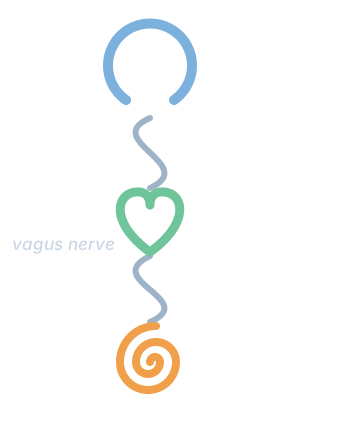
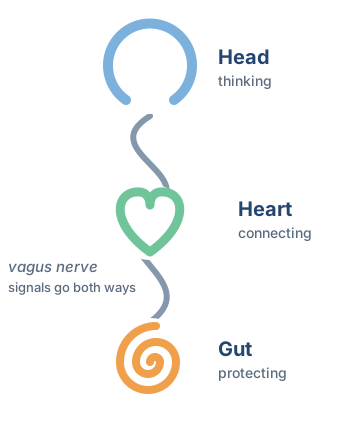
Most language teaching assumes learning happens entirely in the head. But the head, heart, and gut are biologically connected by the vagus nerve, creating a constant loop of information that influences whether a client can speak freely.
Why thinking doesn’t stop freezing.
The vagus nerve is the information superhighway of the nervous system. But it’s not a two-way street equally. 80% of the nerve fibers run upwards, from the body (gut and heart) to the brain.
This is why you cannot “think” your way out of a speaking block. If the gut senses a lack of safety, or the heart senses a risk of rejection, they send danger signals up to the head brain, making it harder for the head brain to organise language.
The Coach’s Intervention: By understanding this biological reality, you stop trying to fix a gut problem with a grammar explanation. You learn to read which brain is driving the block, and respond in the language that brain understands.
The body’s messenger
The vagus nerve: the line between all three brains
The vagus nerve is the longest nerve of the autonomic nervous system. It runs from the brainstem to the heart and the gut, and most of its signals travel upward, from the body to the brain. That helps explain how a learner can know every word and still feel their body say “not safe”.
When the nervous system settles, the learner can stay open, curious and connected. When it signals threat, the thinking brain goes quiet. In a session, a slower pace, a warm voice and a safe pause are practical ways to help it settle.
Ready to coach the whole learner?
Six places per cohort. One changed practice.
Applications are open for the next cohort, starting dates to be announced.
Message me on WhatsApp · nicole@headheartandgut.org · Google reviews